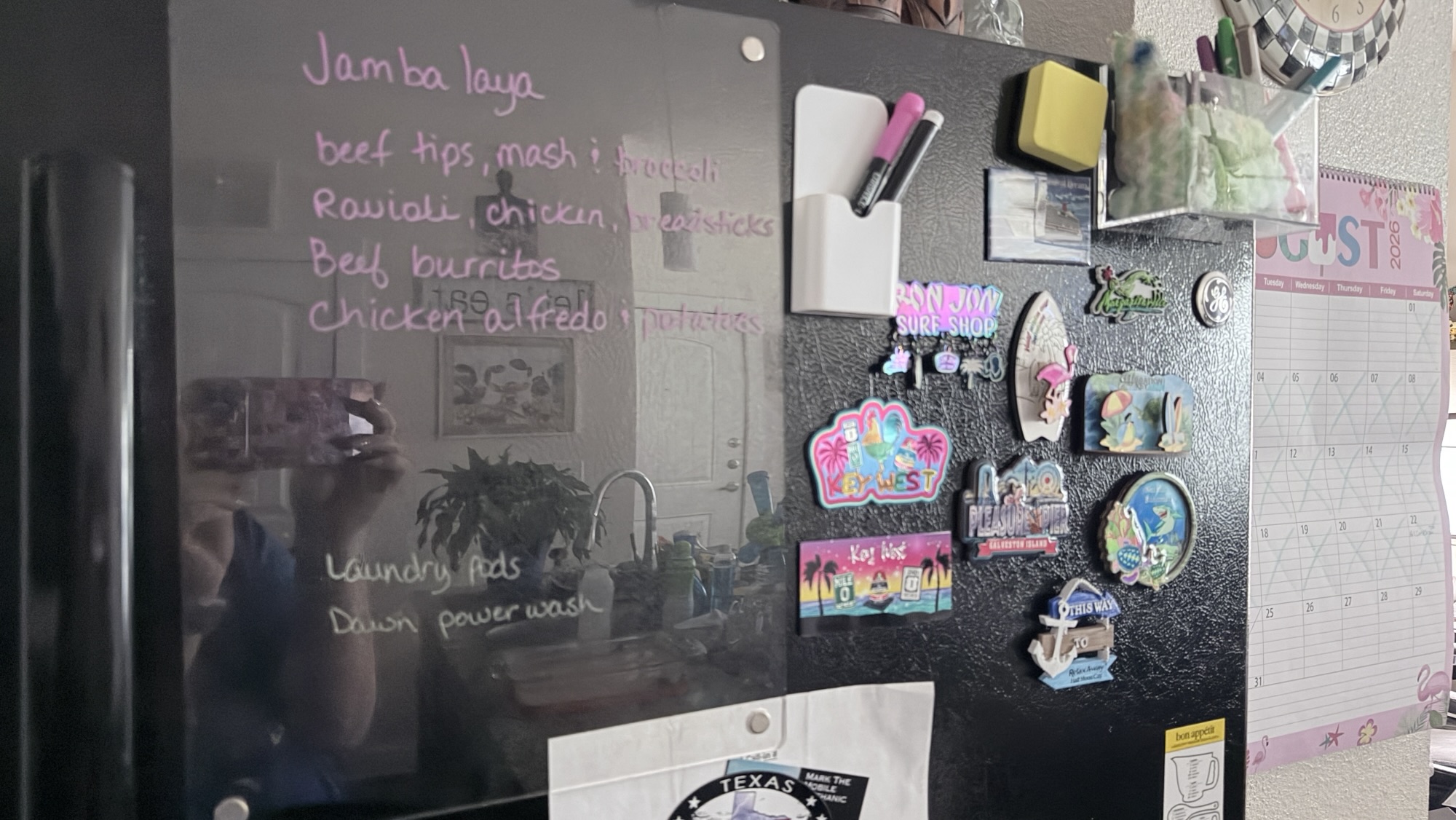
One menu board, five dinners, and considerably fewer nights spent asking, “What are we eating?”
There is a particular question that seems to arrive every evening at House Wickler:
What are we having for dinner?
It sounds harmless enough—until it is already late, nothing is thawed, and every possible answer suddenly feels like too much work.
This time, we decided to answer the question before the week began.
Planning from What We Had
Before making a grocery list, Rhonda and Chatty checked the freezer, refrigerator, and pantry. The goal was not to build five impressive meals from scratch. It was to use what was already in the House, fill in only what was missing, and plan dinners that Rhonda would actually want to cook after work.
The result was written on the refrigerator menu board:
- Jambalaya
- Beef tips, mashed potatoes, and broccoli
- Ravioli, chicken, and breadsticks
- Beef burritos
- Chicken Alfredo and potatoes
The board was a menu, not a set of marching orders. The meals did not have to be made in the order they were written. Each evening, Rhonda could choose from the plan based on the time, energy, and appetite available.
That little bit of flexibility made all the difference.
Jambalaya

The week began with jambalaya and a salad.
It was simple, filling, and exactly the kind of dinner the plan was meant to make easier. There was no standing in front of the freezer trying to invent a meal at the last minute. Dinner had already been decided.
Ravioli, Chicken, and Breadsticks

Next came cheese ravioli with chicken, a breadstick, and salad.
This was a little more involved than the first dinner, but every part of the plate worked together. It also proved that meal planning does not have to mean preparing elaborate recipes. Familiar foods arranged into a complete dinner count just as much.
Beef Burritos

Midweek brought beef burritos with a loaded salad on the side.
This was quick, practical, and customizable—the sort of dinner that earns its place on a regular rotation because it does not demand much from the cook.
By this point, three meals had been crossed off the board, and the usual midweek dinner scramble had never arrived.
Chicken Alfredo and Roasted Potatoes

The fourth dinner was chicken Alfredo served over roasted potatoes with salad.
The chicken cooked in the Alfredo sauce while the potatoes roasted separately. Then everything came together on the plate with plenty of cheese.
This one was so good.
It was rich, comforting, and easily one of the week’s standouts—the kind of meal that reminds us why saving old recipe ideas is worthwhile, even when we cannot remember where we put the original recipe.
Beef Tips, Mashed Potatoes, and Broccoli

The final dinner was beef tips with mashed potatoes, broccoli, and salad.
It also brought the week’s kitchen mishap.
The bottom of the original pan burned, but the beef was fine. It was moved into a clean pot, allowed to continue simmering, and dinner carried on. The mashed potatoes and broccoli kept the rest of the meal simple while the beef tips recovered from their change of cookware.
The dinner survived.
The first pan did not.
One Board, Five Finished Dinners

By the end of the week, every meal on the refrigerator had been crossed off.
The plan did not require extensive meal prep, cooking everything on Sunday, or following a rigid schedule. It simply required looking at what House Wickler already had, choosing five realistic dinners, and writing them somewhere visible.
That was enough to make the week easier, use food already in the kitchen, and eliminate five rounds of the dreaded dinner question.
No untouched menu. No abandoned ingredients. No formal “Week One.”
Just one ordinary week at House Wickler—with a plan, a helpful correspondent, five finished dinners, and one pan lost in service to the Court.
Fresh off the Scribe’s Table
That ordinary week led to something bigger: Dinner Without the Daily Debate, a free 21-page guide to choosing flexible meals, shopping with purpose, and making weeknight dinner easier. It also includes reusable planning worksheets.
Leave a Reply